 Application of Hardfacing Wear Plates in Ports

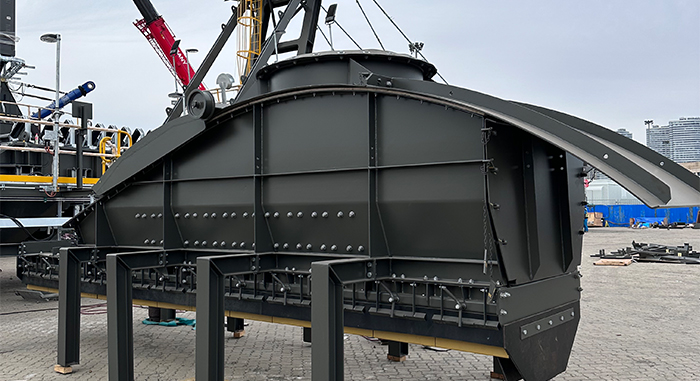
In port operations, hardfacing wear plates are widely applied to diverse handling equipment and yards, especially within bulk cargo handling systems for iron ore, coal and other commodities. Typical components include grabs, hoppers, distributing chutes, coal drop pipes, feed pipes and stacker-reclaimers, which are constantly subjected to heavy impact, abrasion and friction. Lining vulnerable sections with hardfacing composite wear plates effectively extends component service life and cuts downtime for handling equipment maintenance.
When using identical alloy compositions, hardfacing wear plates deliver several times higher abrasion resistance than conventional cast wear plates. The hardfacing layer normally contains 3%–5% carbon and 20%–40% chromium.
A prominent merit of fabricating liners from hardfacing wear plates lies in its bimetallic structure: a high-alloy wear-resistant surfacing bonded to a mild carbon steel base plate. The mild steel substrate features favorable ductility and toughness to withstand heavy shock loads and can be bent or rolled to fit varied working conditions. Therefore, processed hardfacing wear parts boast not only high strength and outstanding wear resistance but also flexible fabrication and installation. Custom-cut into various sizes and intricate shapes via plasma cutting, these plates can be directly welded onto equipment or fastened with bolts for quick, hassle-free mounting.
In summary, the adoption of hardfacing wear plates at ports prolongs equipment lifespan, boosts productivity and reduces maintenance expenses and shutdown periods. With ongoing expansion of the port industry, hardfacing wear plates will see ever-broader field application.

With a leading R&D team, we continuously break through technological barriers, improve products, and develop more professional wear-resistant solutions to make our products more durable. Huisen constantly strives to meet the wear and tear requirements of various working conditions!


Follow Us
Copyright © 2025 Chromium Carbide Overlay Wear Plate & Wear Pipe Manufacturer & Welding Wire | HISAN All rights reserved
 Analysis on Failure Causes and Countermeasures of Blast Furnace Distributing Chute